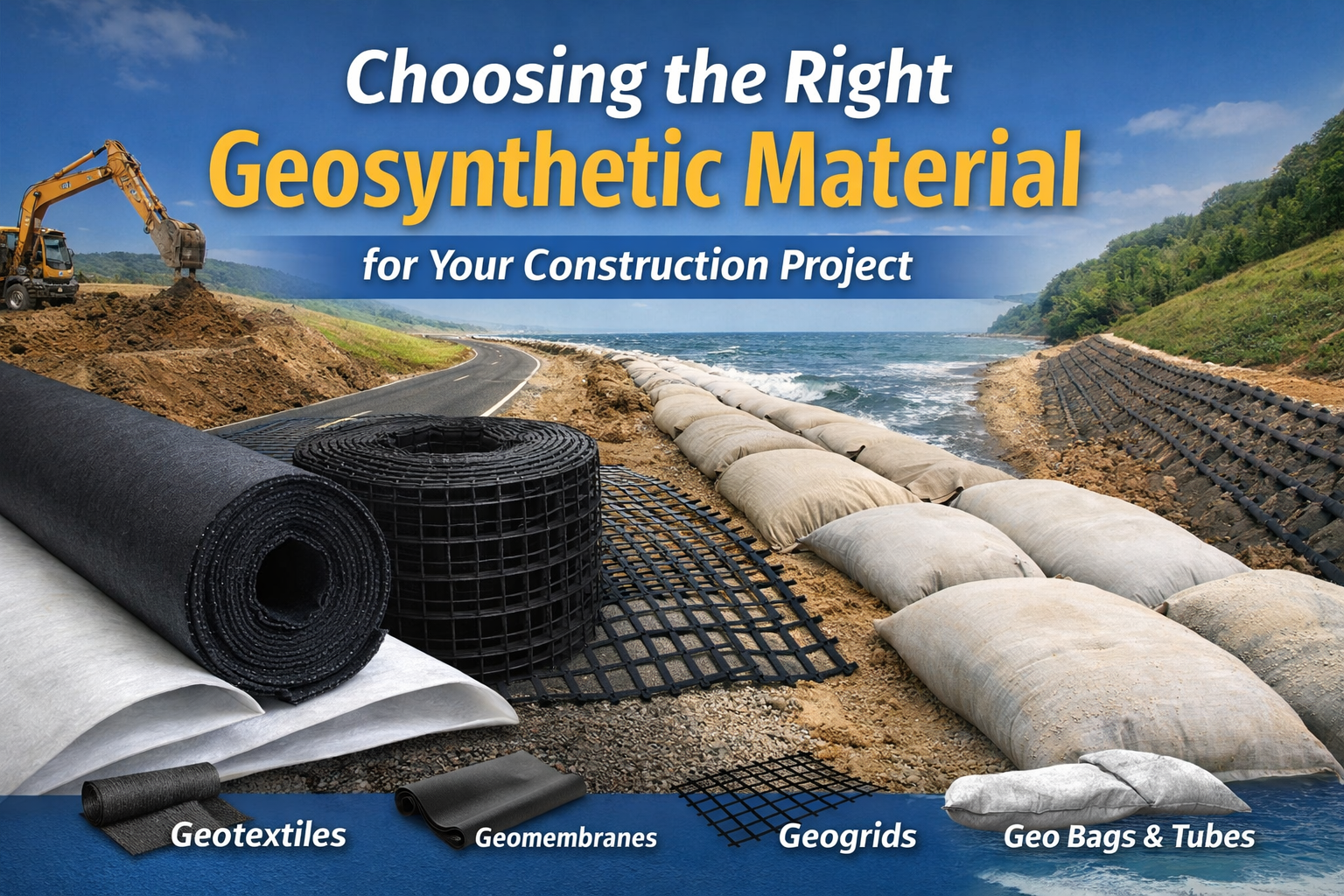
Geotextile Fabric: Complete Guide to Types, Uses, and Benefits
16 Nov 2025What Is Geotextile Fabric?
Types of Geotextile Fabric
1. Woven Geotextile Fabric
Key features:
- Excellent strength and durability
- Ideal for soil stabilization
- Commonly used in road construction and reinforcement projects
Woven geotextile fabric is particularly effective in areas where strong support and minimal elongation are required.
2. Non-Woven Geotextile Fabric
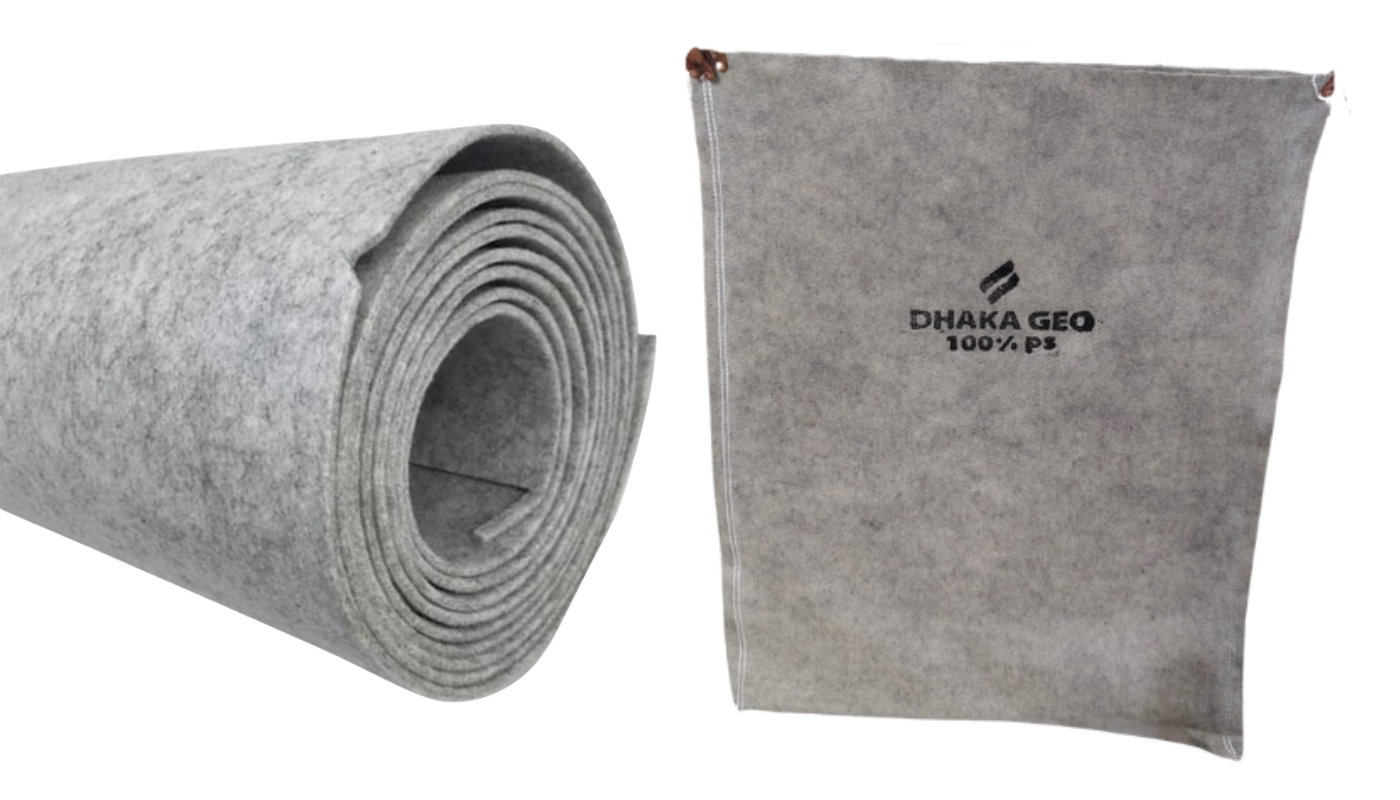
Non-woven geotextiles are manufactured by bonding fibres together through needle punching or heat bonding. They have a felt-like appearance and offer excellent filtration and drainage capabilities.
Key features:
- High permeability
- Superior filtration performance
- Flexible and easy to install
Non-woven geotextile fabric is commonly used in drainage systems, landscaping, and erosion control projects.
3. Knitted Geotextile Fabric
Knitted geotextiles are produced by interlooping yarns. Though less common than woven and non-woven types, they are used in specialised applications where flexibility and reinforcement are required.
Key Functions of Geotextile Fabric
Geotextile fabric performs several essential engineering functions that contribute to infrastructure durability and performance.
1. Separation
One of the primary roles of geotextile fabric is separating different soil layers. For example, it prevents fine subgrade soil from mixing with aggregate layers in road construction. This separation maintains structural integrity and prevents premature failure.
2. Filtration
Geotextile fabric allows water to pass through while retaining soil particles. This function is crucial in drainage systems, retaining walls, and coastal protection projects.
3. Reinforcement
By distributing loads across a wider area, geotextile fabric enhances soil strength and stability. It improves bearing capacity and reduces settlement in weak soils.
4. Drainage
In many applications, geotextile fabric helps channel water efficiently. It supports subsurface drainage systems and prevents water buildup that could weaken structures.
5. Protection
Geotextiles are often used to protect geomembranes in landfill liners, ponds, and reservoirs. They provide cushioning and prevent punctures from sharp objects.
Applications of Geotextile Fabric
Geotextile fabric is used in a wide range of civil engineering and environmental projects.
Road Construction
In road construction, geotextile fabric improves load distribution, enhances stability, and reduces maintenance costs. It prevents intermixing of subgrade soil and aggregates, increasing pavement lifespan.
Drainage Systems
Non-woven geotextile fabric is commonly used around drainage pipes and in French drains. It ensures efficient water flow while preventing soil clogging.
Erosion Control
Geotextile fabric is widely used for slope stabilisation, riverbank protection, and coastal erosion prevention. It helps retain soil while allowing water movement.
Landfill Engineering
In landfill systems, geotextile fabric is used for filtration, separation, and protection of geomembranes. It enhances environmental safety and compliance.
Railway Projects
Geotextile fabric strengthens weak subgrades in railway tracks, reducing track deformation and maintenance frequency.
Landscaping
In landscaping, geotextile fabric prevents weed growth, improves drainage, and maintains soil separation beneath decorative stones and pathways.
Advantages of Using Geotextile Fabric
The growing demand for geotextile fabric is driven by its numerous benefits.
Enhanced Soil Stability
Geotextile fabric improves soil performance by increasing bearing capacity and reducing settlement. This makes it ideal for construction on weak or unstable soils.
Cost-Effective Solution
By extending the lifespan of infrastructure and reducing maintenance requirements, geotextile fabric offers long-term cost savings.
Environmental Sustainability
Geotextile fabric supports eco-friendly construction practices. It minimises soil erosion, protects water bodies, and enhances landfill containment systems.
Easy Installation
Geotextile fabric is lightweight, flexible, and easy to transport and install. This reduces labor time and overall project costs.
Durability
Modern geotextile fabrics are resistant to biological degradation, chemicals, and UV exposure, ensuring a long service life even in harsh conditions.
How to Choose the Right Geotextile Fabric
Selecting the appropriate geotextile fabric depends on project requirements. Key factors include:
- Soil type
- Load conditions
- Drainage requirements
- Environmental exposure
- Strength and elongation properties
Woven geotextile fabric is suitable for reinforcement and heavy-load applications, while non-woven geotextile fabric is ideal for filtration and drainage. Consulting with engineering experts ensures optimal performance and compliance with project specifications.
Quality Standards and Testing
Geotextile fabric must meet specific international standards for tensile strength, puncture resistance, permeability, and durability. Reputable manufacturers conduct rigorous laboratory testing to ensure performance consistency.
- Common tests include:
- Tensile strength testing
- Tear resistance testing
- Permittivity testing
- Puncture resistance testing
Adhering to recognised standards guarantees reliable and long-lasting results.
The Future of Geotextile Fabric in Infrastructure Development
As infrastructure development continues to expand globally, the demand for high-performance geotextile fabric is expected to grow. Governments and private developers are increasingly focusing on durable, cost-effective, and environmentally sustainable construction solutions.
Innovations in material technology are leading to stronger, more resilient, and more specialised geotextile fabrics. Advanced manufacturing techniques are improving product consistency and expanding application possibilities.
In emerging markets, including rapidly developing regions, geotextile fabric is playing a key role in road expansion, flood control systems, coastal protection, and industrial development.
Conclusion
Geotextile fabric has transformed modern construction and civil engineering practices. By offering separation, filtration, reinforcement, drainage, and protection functions, it enhances soil stability and infrastructure durability.
Whether used in highways, drainage systems, erosion control projects, or landfill engineering, geotextile fabric provides a reliable and cost-effective solution. Its strength, permeability, and long service life make it indispensable in today’s infrastructure landscape.
As engineering standards evolve and sustainable construction becomes a priority, geotextile fabric will continue to be a foundational material supporting safe, durable, and efficient development worldwide.
More Topic